





React error tracking installation

  1. Install the package

    Required

    Install posthog-js and @posthog/react using your package manager:

    npm install posthog-js @posthog/react
  2. Add environment variables

    Required

    Add your PostHog API key and host to your environment variables. For Vite-based React apps, use the VITE_PUBLIC_ prefix:

    .env
    VITE_PUBLIC_POSTHOG_KEY=<ph_project_api_key>
    VITE_PUBLIC_POSTHOG_HOST=https://us.i.posthog.com
  3. Initialize PostHog

    Required

    Wrap your app with the PostHogProvider component at the root of your application (such as main.tsx if you're using Vite):

    main.tsx
    import { StrictMode } from 'react'
    import { createRoot } from 'react-dom/client'
    import './index.css'
    import App from './App.jsx'
    import { PostHogProvider } from '@posthog/react'
    const options = {
    api_host: import.meta.env.VITE_PUBLIC_POSTHOG_HOST,
    defaults: '2026-01-30',
    } as const
    createRoot(document.getElementById('root')).render(
    <StrictMode>
    <PostHogProvider apiKey={import.meta.env.VITE_PUBLIC_POSTHOG_KEY} options={options}>
    <App />
    </PostHogProvider>
    </StrictMode>
    )
    defaults option

    The defaults option automatically configures PostHog with recommended settings for new projects. See SDK defaults for details.

  4. Accessing PostHog in your code

    Recommended

    Use the usePostHog hook to access the PostHog instance in any component wrapped by PostHogProvider:

    MyComponent.tsx
    import { usePostHog } from '@posthog/react'
    function MyComponent() {
    const posthog = usePostHog()
    function handleClick() {
    posthog.capture('button_clicked', { button_name: 'signup' })
    }
    return <button onClick={handleClick}>Sign up</button>
    }

    You can also import posthog directly for non-React code or utility functions:

    utils/analytics.ts
    import posthog from 'posthog-js'
    export function trackPurchase(amount: number) {
    posthog.capture('purchase_completed', { amount })
    }
  5. Send events

    Recommended

    Click around and view a couple pages to generate some events. PostHog automatically captures pageviews, clicks, and other interactions for you.

    If you'd like, you can also manually capture custom events:

    JavaScript
    posthog.capture('my_custom_event', { property: 'value' })
  6. Set up exception autocapture

    Recommended

    You can enable exception autocapture for the JavaScript Web SDK in the Error tracking section of your project settings.

    When enabled, this automatically captures $exception events when errors are thrown by wrapping the window.onerror and window.onunhandledrejection listeners.

  7. Set up error boundaries

    Optional

    You can use the PostHogErrorBoundary component to capture rendering errors thrown by components:

    JavaScript
    import { PostHogProvider, PostHogErrorBoundary } from '@posthog/react'
    const Layout = () => {
    return (
    <PostHogProvider apiKey="<ph_project_api_key>">
    <PostHogErrorBoundary
    fallback={<YourFallbackComponent />} // (Optional) Add a fallback component that's shown when an error happens.
    >
    <YourApp />
    </PostHogErrorBoundary>
    </PostHogProvider>
    )
    }
    const YourFallbackComponent = ({ error, componentStack, exceptionEvent }) => {
    return <div>Something went wrong. Please try again later.</div>
    }
  8. Manually capture exceptions

    Optional

    It is also possible to manually capture exceptions using the captureException method:

    JavaScript
    posthog.captureException(error, additionalProperties)
  9. Verify error tracking

    Recommended
    Confirm events are being sent to PostHog
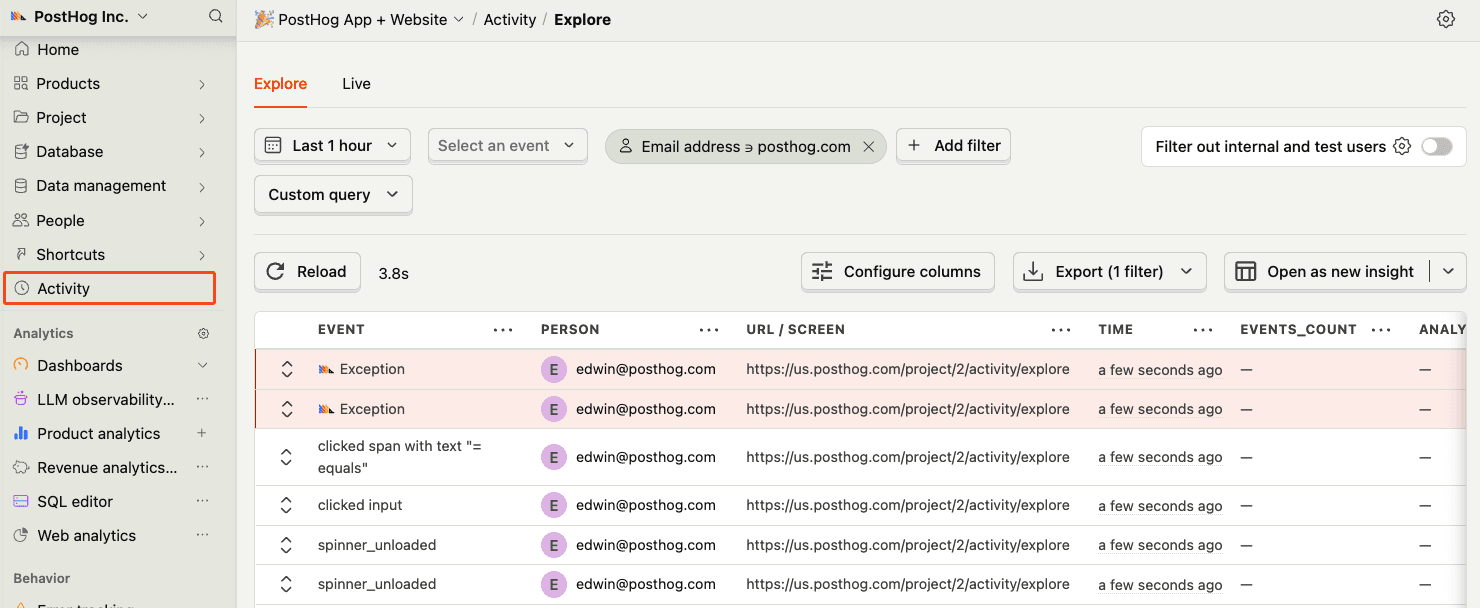
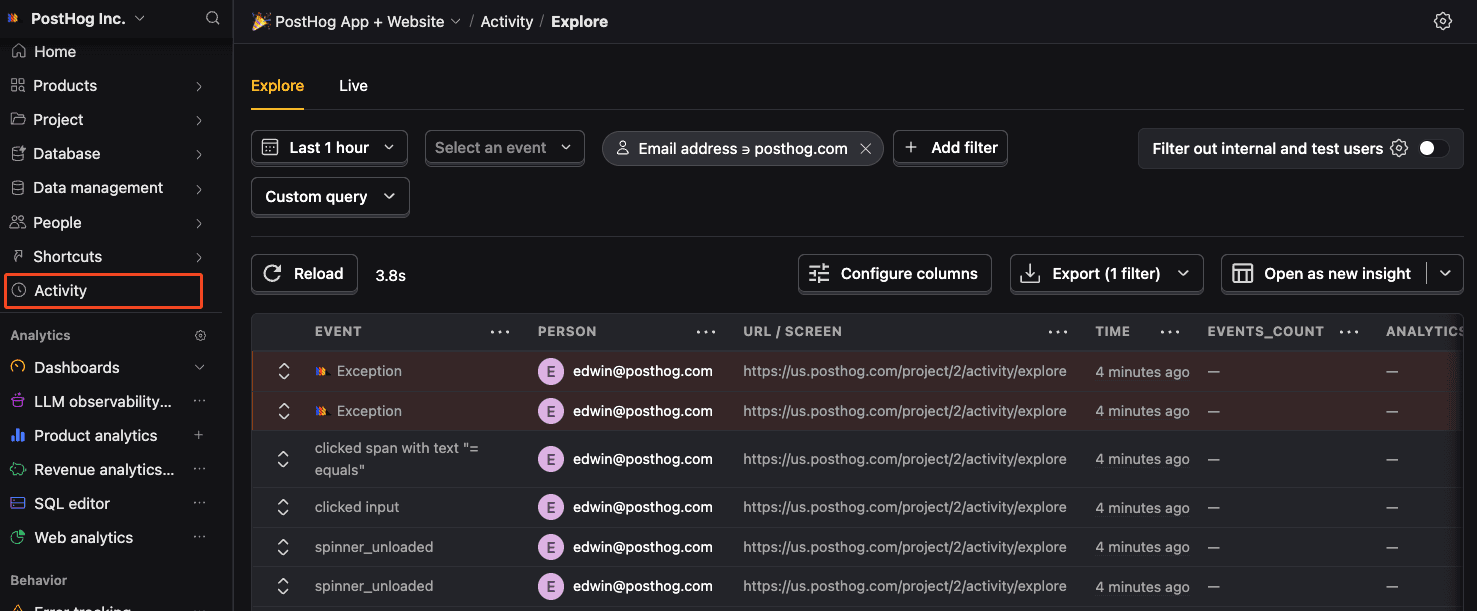
    Before proceeding, let's make sure exception events are being captured and sent to PostHog. You should see events appear in the activity feed.
    Activity feed with events
    Check for exceptions in PostHog
  10. Upload source maps

    Required

    Great, you're capturing exceptions! If you serve minified bundles, the next step is to upload source maps to generate accurate stack traces.

    Let's continue to the next section.

    Upload source maps

Community questions

Was this page useful?

Questions about this page? or post a community question.